
Thirty planning applications were validated across the Sevenoaks district in the week from 1 June 2026, led by outline housing at New Ash Green and Kemsing.
Two proposals to build new homes in Sevenoaks villages have been lodged with the district council, among 30 planning applications validated in the week beginning 1 June 2026. Both seek what is known as permission in principle: one for up to nine homes at New Ash Green, the other for up to seven at Kemsing. Most of the rest of the week’s list is routine work to trees, minor amendments and the discharge of conditions. Here is what was put in, and how to check whether anything has been proposed near you.
The two housing schemes to watch
The council’s weekly list, published on its Public Access planning portal, recorded 30 applications validated in the seven days from 1 June. (Sevenoaks District Council, Weekly list of validated applications, week beginning 1 June 2026) Two of them propose new housing.
Up to nine homes at New Ash Green (26/01379/PIP). An application for permission in principle covers land to the south-west of West Yoke Depot, Michaels Lane, New Ash Green, seeking “erection of dwellings with a minimum of 1 or maximum of 9 net dwellings and associated ancillary works.” (Sevenoaks District Council, Public Access, application 26/01379/PIP) It is the second time New Ash Green has featured in the planning record in a fortnight: the same committee that hears the district’s larger schemes refused a 235-acre solar farm nearby on 2 June. (See our report on the New Ash Green solar farm refusal.)
Up to seven homes at Kemsing (26/01327/PIP). A second permission-in-principle application covers land at the rear of Childsbridge House, Childsbridge Lane, Kemsing, TN15 0BZ, for “erection of dwellings with a minimum of 1 or maximum of 7 net dwellings and associated ancillary works.” (Sevenoaks District Council, Public Access, application 26/01327/PIP)
What “permission in principle” actually means
Neither application is a detailed scheme with house types, layouts and parking. Permission in principle is a two-stage route set out in national planning rules. The first stage settles only three things: whether the site is suitable in principle for housing, where it is, and how many homes it could take. Everything else, the design, access, drainage, landscaping and conditions, is left to a later “technical details consent” application, which is where most of the substance is decided.
In practice that means a grant of permission in principle is not a green light to start building, but it does establish the principle of housing on the land, which is the harder hurdle in a district where most sites sit within the Kent Downs National Landscape or the Metropolitan Green Belt. Residents who want a say should engage at this first stage, because the question of whether the land should be built on at all is settled here.
The rest of the week’s list
The two housing proposals aside, the applications validated that week are the everyday business of a planning department. The ones on the first page of the council’s list were:
- Tree works in conservation areas and under protection orders: various works to trees at Sundridge Village Hall, Main Road, Sundridge (26/01402/WTCA); at Jasmine Cottage, School Lane, Swanley (26/01391/WTCA); and at Prices Wood, Pounsley Road, Dunton Green (26/01334/WTPO).
- Non-material amendments to schemes already approved: at the site of 14 Top Dartford Road, Hextable (26/01415/NMA), and 51 Cyclamen Road, Swanley (26/01230/NMA).
- Condition details for an approved house at Bower Farm House, Bower Lane, Eynsford, covering external materials and external lighting (26/01189/DETAIL and 26/01376/DETAIL).
- A lawful development certificate at September Cottage, Church Street, Shoreham, to confirm that a 2005 permission was lawfully begun in time (26/01190/LDCEX).
That is the first 10 of the 30 validated applications. The full week’s list, including the schemes not detailed here, is on the council’s portal under the week-beginning dropdown.
What it means for you
A validated application is one the council has accepted as complete and started to process; it is the point at which the public consultation clock usually begins. If a site near you is on the list, this is the window to comment.
- Check your own street. Search any application by reference or by postcode on the council’s Public Access planning portal, where every document, plan and officer report is published.
- Comment within the consultation window. You can submit support or objections on a live application through the same portal. The council explains how on its view and comment on a planning application page. Objections carry most weight when they cite planning grounds: harm to the landscape, highway safety, overlooking, loss of light.
- Know who decides. Most applications are settled by planning officers under delegated powers; only the larger or more contested ones go to the Development Management Committee. The council sets out the process on its how planning applications are decided page.
- See the bigger picture. Our guide to Sevenoaks planning applications explains how to read the weekly lists, and our roundup of recent Sevenoaks planning decisions covers what the committee has been granting and refusing.
We will report the bigger schemes here as they progress through the system.
Sources
- Sevenoaks District Council, Weekly list of validated planning applications (Public Access), week beginning 1 June 2026
- Sevenoaks District Council, Public Access planning portal (applications 26/01379/PIP, 26/01327/PIP and the wider weekly list)
- Sevenoaks District Council, View and comment on a planning application
- Sevenoaks District Council, How planning applications are decided
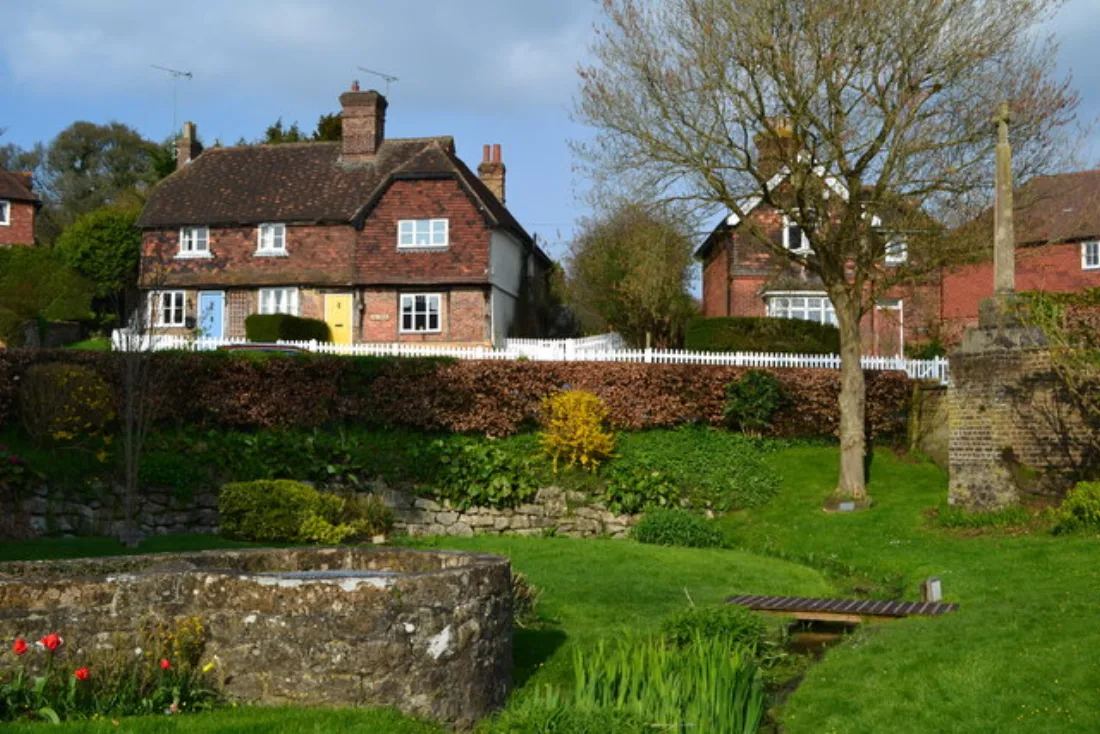
Image: Cottages overlooking St Edith’s Well, Kemsing, by David Martin, CC BY-SA 2.0, via Geograph.
Have your say