
Councillors refused 660 homes on the former Broke Hill golf course on 24 September, against officer advice. The Green Belt grounds and what happens next.
The committee refused the Broke Hill golf course application on Thursday night, against its officers' advice. Only three members voted for the recommendation to grant, and a motion to refuse on Green Belt grounds was then carried by a majority, with no recorded vote. The council must now refer the case to the Secretary of State before a refusal notice can be issued. The decision and what happens next is below; the rest of this page is our preview from before the meeting.
The decision: refused against officer advice
The Development Management Committee met at 7pm on Thursday 24 September with Broke Hill as its only item. Members had walked the site the previous morning. After the public speakers and more than two hours of debate, the chairman put the officers’ recommendation to grant permission to a show of hands. Three members voted for it and it fell. (Sevenoaks District Council, recording of the Development Management Committee, 24 September 2026)
A motion to refuse was then proposed and seconded. As read out to the committee before the vote, it has two grounds, both under the Green Belt chapter of the new National Planning Policy Framework:
- the site does not qualify as grey belt under policy GB7, and members were not satisfied that it meets the test in part H, which covers land within reasonable walking distance of a well-connected station
- it is therefore inappropriate development in the Green Belt under policy GB6, and there are no very special circumstances that clearly outweigh the harm
The debate leading to it turned on three things: the site’s role in stopping London’s built-up area spreading into the district, doubt that water supply for the new homes had been shown to exist, and whether Knockholt station, which has no step-free access, can fairly count as well connected. Nobody abstained, and the chairman confirmed the application “was refused by a majority”. The counts against were not read out and it was not a recorded vote, so the minutes, when published, are the place to look for the numbers. The wording will be tidied into formal reasons by officers. (Recording, 24 September 2026)
Officers warned before the vote that they could not support these grounds. The officer advising the committee told members the report found the harm could be dealt with through conditions and the Section 106 agreement, that Active Travel England was satisfied with the walking route to the station, and that refusing against the advice of statutory consultees carried “a strong chance” of being judged unreasonable behaviour, the test that decides whether a council pays the developer’s costs at appeal.
What happens next
The refusal is not yet final. Officers told the committee the council is required to refer the decision to the Secretary of State, which it expected to do within a couple of days. The Secretary of State then has 21 days, or longer if the department writes to ask for more time, to decide whether to call the application in and decide it nationally. If there is no call-in, the council can issue the refusal as the committee resolved. (Recording, 24 September 2026)
After that, the applicant can appeal to the Planning Inspectorate, as happened with the 800-home scheme refused in 2019. Officers said the council would take legal and specialist planning advice on whether the grounds can be defended, and that the committee would hear that advice in closed session. Meanwhile the same land stays in the draft Local Plan as a provisional allocation for 714 homes, a separate process that goes to a government inspector at examination.
As of 28 September the council had published no minutes or decision notice for the meeting; the account above is taken from the council’s own recording.
Our preview, published before the meeting
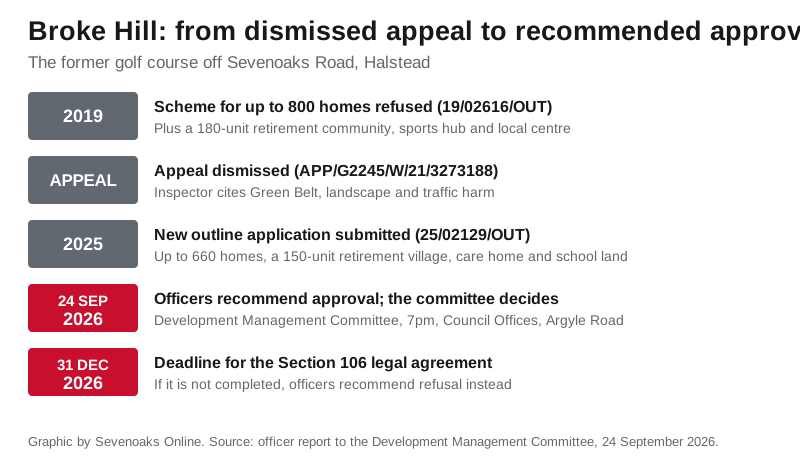
Council officers recommended approval for up to 660 homes on the former Broke Hill Golf Club at Halstead, the largest planning application in the district. The Development Management Committee was due to decide on Thursday 24 September at 7pm. (Officer report to the Development Management Committee, 25/02129/OUT)
The recommendation is a reversal of fortune for a site where a bigger scheme was refused and then dismissed at appeal. It comes days after the council’s draft Local Plan, which pencils in 714 homes on the same land on a provisional basis, closed its final consultation on Thursday 17 September.
What is proposed
The outline application, 25/02129/OUT, covers the former golf course off Sevenoaks Road, opposite Knockholt station. It seeks, with all matters reserved except access:
- up to 660 homes
- a retirement village of up to 150 units and a care home
- a local centre, café and mixed-use area
- land safeguarded for a new primary school
- a country park, car parking and landscaping
Half of the housing would be affordable, split 65 per cent affordable or social rent and 35 per cent intermediate and shared ownership. (Officer report, 25/02129/OUT)
Why officers say yes where an inspector said no
The previous application, 19/02616/OUT, proposed up to 800 homes, a 180-unit retirement community, a sports hub and commercial space. The council refused it, and a planning inspector dismissed the appeal, ref APP/G2245/W/21/3273188, mainly on Green Belt harm, landscape impact and traffic generation. (Officer report, planning history section)
Two things have changed since, according to the report.
First, national policy. The 2024 rewrite of the National Planning Policy Framework introduced “grey belt”, Green Belt land judged to make a weak contribution to the belt’s purposes, and the August 2026 version refined it. Officers conclude the Broke Hill site is grey belt, which opens a route to approval if the scheme meets the policy’s tests, including its “Golden Rules” on affordable housing, green space and infrastructure. The report says the scheme “would comfortably meet” them. Notably, the council’s own Stage 2 Green Belt Assessment reached the opposite view of this land; officers answer that the developable site is smaller than the parcels that study assessed.
Second, the housing shortfall has deepened. The council can currently show 3.59 years of housing land supply against the five years required, and that is an improvement on the 2.96 years of October 2025. (Officer report, Green Belt and housing supply sections)
Nearly 1,000 objections
The application drew 976 letters of objection in the first consultation round, against 11 in support, with Green Belt impact the most cited reason, raised in 653 of them. A second consultation brought 393 more objections, led again by Green Belt (294) and by traffic (255). (Officer report, representations section)
Halstead Parish Council objects, arguing the site is not grey belt, that development would fundamentally undermine the Green Belt’s purposes, and that traffic will bring noise and congestion. Knockholt Parish Council objects over the scale of the scheme, pressure on infrastructure including Southeastern trains, and roads it considers unsuitable. The item is before the committee because Councillor Grint called it in, citing Green Belt policy, the previous appeal and pressure on health, education and transport. (Officer report, consultation responses)
What the developer would have to fund
Approval would be conditional on a Section 106 legal agreement, completed by 31 December 2026. If it is not signed by then, officers recommend refusal instead. The package includes:
- extending Transport for London bus route R7 to Knockholt station
- raising Kent County Council’s route 3, which serves Sevenoaks via Knockholt station, to at least one bus an hour through the day
- payments to Network Rail for station improvements
- land and construction contributions for secondary school places, plus SEND funding
- healthcare contributions to the South East London NHS integrated care board
- public rights of way improvements and travel plan monitoring
(Officer report, recommendation and S106 heads of terms)
How the meeting was run, and who got to speak
The meeting started at 7pm on Thursday 24 September in the Council Chamber at Argyle Road with a full public gallery, and it was livestreamed on the council’s YouTube channel, where the full recording stays up. The agenda went up on 16 September; the officer report runs from page 13 to page 122 of the reports pack. (Agenda frontsheet, Development Management Committee, 24 September 2026)
Public speaking is rationed. The council allowed one speaker for an application and one against, three minutes each, strictly timed with a visual warning at one minute left, and slots go first come, first served. Among supporters, preference goes to the applicant or their agent. That is why 1,369 objection letters came down to one voice: whoever registers first speaks, and anyone who rings afterwards is put in touch with them to agree between themselves what gets said. Parish councils and the local district members speak in their own slots after the public speakers. (Sevenoaks District Council, request to speak on a planning application; advice on speaking on planning applications)
The late papers and the site visit
The decision was not deferred. Members inspected the site on the morning of Wednesday 23 September, the day before the meeting, and the Late Observations sheet posted for the meeting logged 13 further objections, which officers said repeated points already covered in the report; their recommendation stayed unchanged. The same sheet set out the “presumptions in favour of development” in the new National Planning Policy Framework for members, the policies on which the refusal debate then turned. (Late Observations, Development Management Committee, 24 September 2026; recording, 24 September 2026)
It broke a pattern. At the previous meeting, on 3 September, all five decisions went the officers’ way. (Minutes, Development Management Committee, 3 September 2026)
What a grant would have meant
Had the committee followed the recommendation, outline permission would establish the principle of a development roughly the size of a village between Halstead and Badgers Mount. Detailed designs would still come later, through reserved matters applications, each with its own consultation.
The full application documents are on the council’s planning portal under reference 25/02129/OUT, and the meeting papers are on the council’s committee pages. Our guide to Sevenoaks planning applications explains how to search the portal and how to comment on schemes near you.
The committee did not grant it. The decision and what happens next is at the top of this page.
Sources
- Sevenoaks District Council, officer report to the Development Management Committee, 25/02129/OUT, Former Broke Hill Golf Club
- Sevenoaks District Council, Development Management Committee agenda, 24 September 2026
- Sevenoaks District Council, agenda frontsheet, Development Management Committee, 24 September 2026 (PDF)
- Sevenoaks District Council, request to speak on a planning application
- Sevenoaks District Council, advice on speaking on planning applications
- Sevenoaks District Council, recording of the Development Management Committee, 24 September 2026 (YouTube)
- Sevenoaks District Council, Late Observations, Development Management Committee, 24 September 2026 (PDF)
- Sevenoaks District Council, minutes of the Development Management Committee, 3 September 2026 (PDF)
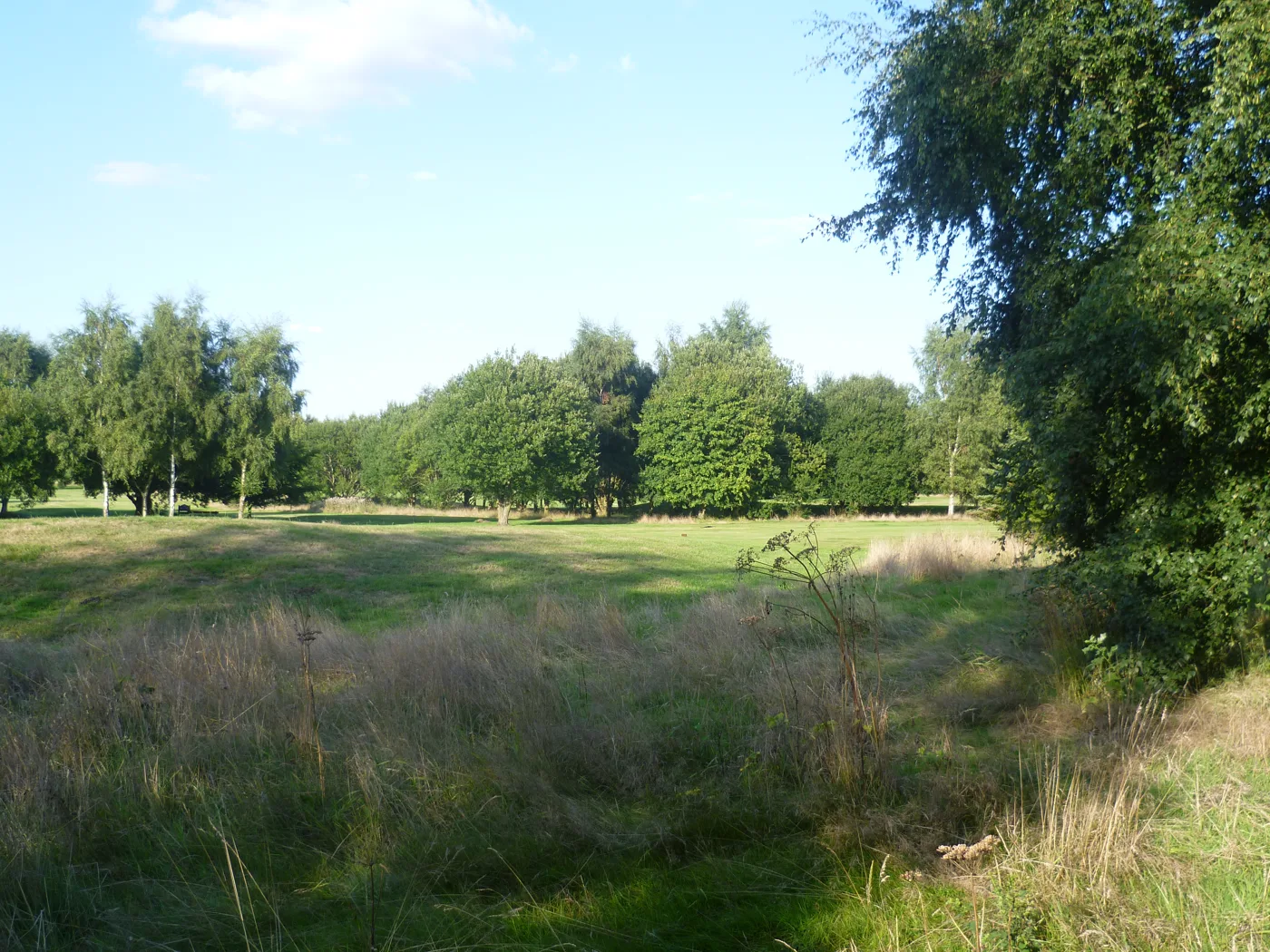
Image: Broke Hill Golf Course by Marathon, CC BY-SA 2.0, via Geograph.
Have your say
D Mills 22 September 2026
The National Planning Policy Framework (NPPF) dated August 26 creates a strong policy presumption in favour of higher-density development around well-connected railway stations like Knockholt. The Council identifies 1,200 households in need of a home and the 330 affordable homes proposed will help reduce the need. The need for a care village is supported by Sevenoaks' own evidence, which projects the 75-84 population to increase by about 41% and the 85+ population by about 61% between 2021 and 2043.