
Sevenoaks Local Plan comments closed on 17 September with 2,175 responses published. You can read them all online. The inspector examines the plan in 2027.
It is closed. Comments shut at 11.59pm on Thursday 17 September and the council's Local Plan page now reads "this consultation has now closed". Its consultation portal has published 2,175 responses, which anyone can read by name, and the true total is higher because only people who ticked the consent box are listed. The next fixed date is local rather than national: the Development Management Committee decides the 660 homes at Broke Hill on Thursday 24 September.
The eight-week consultation on the Sevenoaks Local Plan closed at 11.59pm on Thursday 17 September. It was the last formal chance to be heard before the plan goes to a Government-appointed inspector, and anything arriving now “will be marked as late and may not be considered by the Planning Inspector”. (Sevenoaks District Council, Statement of Representations Procedure, July 2026 (PDF))
The plan sets out where 17,460 homes would be built across the district between 2027 and 2042. That works out at 1,164 homes a year, a 63 per cent increase on the current target. (Sevenoaks District Council, Local Plan Regulation 19 Publication)
We reported how the consultation works when it opened on 23 July. This piece is the record of what was in the plan, what the inspector will be asked to weigh, and what happens from here.
The biggest sites in the plan
The published plan names three strategic sites, plus a development area around Sevenoaks railway station. (Sevenoaks District Local Plan, Regulation 19 Publication version, Chapter 1 (PDF))
- Land north of Sevenoaks, west of Otford Road: 1,500 homes. Farmland between Dunton Green station and Otford Road, with a new primary school, a local centre on Rye Lane and a park on the River Darent floodplain. We set out what the council’s development brief promises.
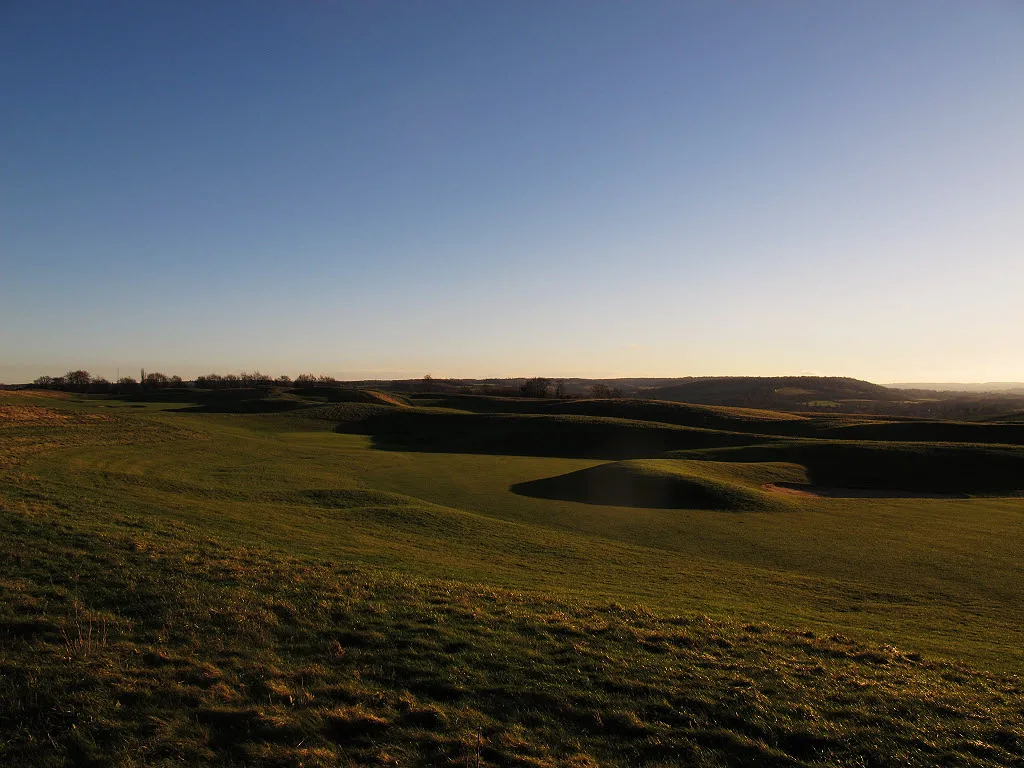
- Pedham Place: 2,600 homes. The 140-hectare golf course at junction 3 of the M25, on the edge of Swanley in Farningham and Eynsford parishes. The plan treats it as a potential standalone settlement with its own schools, jobs and community facilities. It sits in both the Green Belt and the Kent Downs National Landscape, so the plan says the development must be shown to be in the public interest.
- Broke Hill: 714 homes. The former golf course off Sevenoaks Road near Pratts Bottom, close to Knockholt station. The plan includes it on a provisional basis because a live outline application, 25/02129/OUT, already seeks up to 660 homes, a 150-unit retirement village, a care home, a primary school and a country park. When the plan was published the council said it had not formed a view on that application; its planning officers have since recommended approval, and the Development Management Committee decides on 24 September. The June draft we reported in the summer had put the site at 810 homes.
- Sevenoaks railway station. No single housing number, but the plan identifies the station area, including its 517-space car park, for denser development. Options include decking the car park or building above it, under a development brief prepared with Network Rail.
Smaller allocations run right across the district, including 228 homes at Brittains Lane in Kippington, 300 at the One 60 office building on London Road, and 289 on land east of London Road at Dunton Green. (Sevenoaks District Local Plan, Regulation 19 Publication version, site schedules (PDF)) You can check what is proposed near you on the council’s interactive map of proposed sites.
What happened during the consultation
The eight weeks were not quiet. Otford Parish Council republished the council’s development brief for the 1,500-home site, which we reported in full. Kent Wildlife Trust called on the public to object to the same allocation, saying it would cut one of the last open links between Sevenoaks Wildlife Reserve and the countryside beyond it. (Kent Wildlife Trust, 5 August 2026) Our report on the Trust’s objection explains what it wants changed. Residents have also walked the Brittains Lane site with local councillors.
The test the comments have to meet
This stage was never a vote on whether building should happen, and the council could not accept suggestions for new sites at it. Regulation 19 comments go straight to the Planning Inspector, and the form was built around the two questions the inspector has to answer: is the plan legally compliant, and is it sound? (Sevenoaks District Council, Regulation 19 Publication: How to Respond (PDF))
Legally compliant covers the process rather than the contents: whether the plan was prepared in line with the council’s Local Development Scheme and Statement of Community Involvement, whether it was put through a Sustainability Appraisal, a Strategic Environmental Assessment and a Habitats Regulations Assessment, whether it includes policies to mitigate and adapt to climate change, and whether it was prepared in accordance with the Equality Act 2010. (How to Respond)
Sound has four named limbs, and the form asked respondents to tick which ones they say the plan fails:
- Positively prepared. It plans for enough homes, jobs and infrastructure to meet the district’s needs.
- Justified. The decisions are based on robust evidence.
- Effective. The plan is deliverable in practice.
- Consistent with national policy.
A comment that names a policy or an allocation and then names the limb it fails is the kind the inspector’s form was built to take. (Sevenoaks District Council, Regulation 19 response form, Part B (PDF))
The two questions almost everyone misses
The form had three more boxes after the soundness tick list, and two of them decide how much an objection is now worth.
- “Please set out any modification(s) you consider necessary.” An objection with no requested change is a complaint; an objection that says what the plan should say instead is a modification the inspector can actually make. That was the box that turned one into the other.
- “If your representation is seeking modification to the Local Plan, do you consider it necessary to request participation in the examination hearing session(s)?” This is the one that cannot be recovered. The council’s guidance says it plainly: “If you want to request to participate in the examination hearings, you will need to respond at this stage.” The hearings are in 2027, and only people who ticked that box before the deadline can ask to speak at them. (Part B form; How to Respond)
- The third asked whether the council kept up effective cooperation with neighbouring councils and statutory bodies, the duty-to-cooperate question. It matters to anyone arguing that Sevenoaks is taking, or dodging, housing that belongs elsewhere.
One more piece of form mechanics, which shapes what the inspector now has in front of them. Part A was the respondent’s details, filled in once. Part B was the representation itself, and the instruction was to “complete a separate sheet for each representation you wish to make”, so objecting to Pedham Place, Broke Hill and the Otford Road site counted as three sheets rather than one. (Part B form)
Representations could also be made on the evidence base rather than the plan itself: the Sustainability Appraisal, the Habitats Regulations Assessment and the SHELAA land availability assessment were all open to comment. (Statement of Representations Procedure)
What you can do now it has closed
You can read what other people wrote. The council’s consultation portal has published 2,175 responses, listed by the respondent’s name and open to anyone without an account. (Sevenoaks District Council engagement portal, published responses) That figure is a floor rather than a total: the portal says “only answers from respondents who gave permission are published”, while “all responses are included in the analysis of this activity”, so the number the inspector receives is larger than the number you can read.
A late comment is not a comment. The council’s formal notice says representations arriving after the deadline “will be marked as late and may not be considered by the Planning Inspector”, and there is no separate route to add one now. (Statement of Representations Procedure)
If you did respond, expect to hear from the council. Submitting a representation automatically adds you to its database for notification of the next stage of the plan, and you can opt out at any time. (Statement of Representations Procedure)
Nothing anyone wrote is private. The council’s notice says copies of all representations “will be made available for the public to view and reviewed by the Planning Inspector, and therefore, cannot be treated as confidential”. The consent box on the portal controls whether a response appears on the website, not whether it is disclosed to the examination. (Statement of Representations Procedure; Sevenoaks District Council engagement portal)
Individual applications still have their own consultations. The plan closing does not close anything on a live planning application, each of which takes comments on its own timetable. The nearest example is the first of the strategic sites to reach a decision: the Development Management Committee meets at 7pm on Thursday 24 September to decide the 660 homes at Broke Hill. (Sevenoaks District Council, calendar of meetings, September 2026) Our guide to Sevenoaks planning applications explains how to search the council’s portal by postcode and comment on what is live.
What happens next
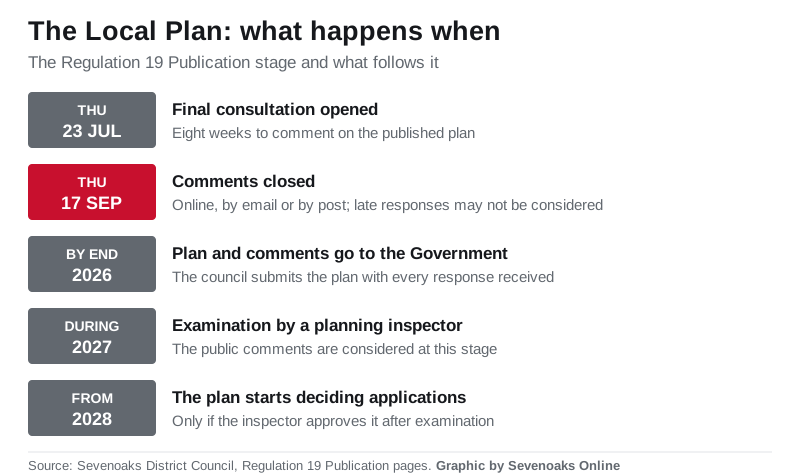
The council’s Local Plan page, rewritten now the consultation has closed, says the revised plan and the comments made on it “will be submitted to Government later this year”. A Government-appointed planning inspector will examine it in 2027 and the comments will be considered at that examination. If the inspector approves it, the plan will be used to help decide planning applications from 2028. (Sevenoaks District Council, Local Plan proposals, checked 18 September 2026)
The council has been blunt about the stakes. Cllr Nigel Williams, the Cabinet Member for Development and Infrastructure, warned that failing to agree a Local Plan “would also leave the District open to piecemeal development, making it difficult for public services, like the NHS and transport bodies, to provide new infrastructure needed to support the new housing”. (Sevenoaks District Council, Another chance to comment on the new Local Plan)
What it means for you
If a site near you survives into the final plan, the principle of building there becomes very hard to resist when a detailed application later arrives. That argument has now moved out of the district’s hands and into an inspector’s, and the only people who can put it in person are those who asked to before Thursday night. What is left locally is the applications themselves, one site at a time, starting at Broke Hill on 24 September.
The council’s Local Plan page, its consultation portal and its meetings calendar were all checked on 18 September 2026.
Sources
- Sevenoaks District Council, Local Plan Regulation 19 Publication
- Sevenoaks District Local Plan, Regulation 19 Publication version (PDF)
- Sevenoaks District Council, Another chance to comment on the new Local Plan
- Sevenoaks District Council, Statement of Representations Procedure, July 2026 (PDF) (withdrawn from sevenoaks.gov.uk when the consultation closed on 17 September 2026)
- Sevenoaks District Council, Regulation 19 Publication: How to Respond (PDF) (withdrawn from sevenoaks.gov.uk when the consultation closed on 17 September 2026)
- Sevenoaks District Council, Regulation 19 paper response form, Part B, survey questions (PDF)
- Sevenoaks District Council engagement portal, Regulation 19 Publication: published responses
- Sevenoaks District Council, calendar of meetings, September 2026
- Kent Wildlife Trust, Kent Wildlife Trust calls on public to stand up for Sevenoaks Wildlife Reserve against major development threat, 5 August 2026
Image: Pedham Place golf course by Stephen Craven, CC BY-SA 2.0, via Geograph.
Have your say